
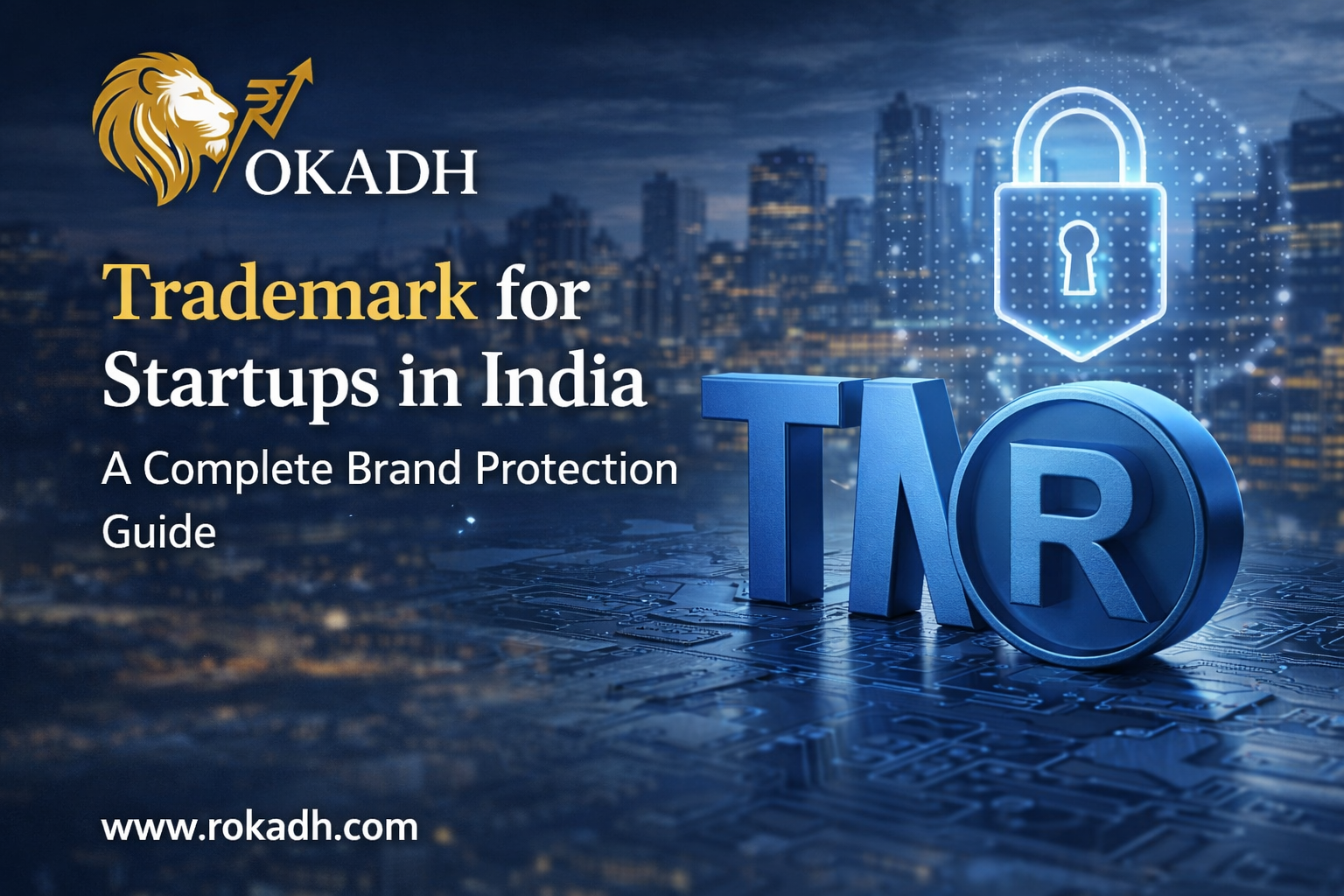
In today’s competitive startup ecosystem, your brand is one of your most valuable assets. A strong brand name, logo, or tagline helps customers recognize your business, builds trust, and differentiates you from competitors. However, many startups overlook a critical step in brand building—Trademark Registration.
This comprehensive guide explains what trademarks are, why they matter for startups, how to register a trademark in India, common mistakes to avoid, and how trademarks support long-term business growth.
1. What Is a Trademark?
A trademark is a unique symbol, word, logo, slogan, design, or combination thereof that identifies and distinguishes the goods or services of one business from another.
In India, trademarks are governed by the Trade Marks Act, 1999 and administered by the Controller General of Patents, Designs and Trade Marks (CGPDTM).
Examples of Trademarks:
- Brand names (e.g., product or company name)
- Logos and symbols
- Taglines or slogans
- Shapes, colors, or sounds (in specific cases)
For startups, a trademark is not just a legal formality—it is a business protection tool.
2. Why Trademark Is Crucial for Startups
Startups operate in fast-moving, competitive environments. Without trademark protection, a startup risks losing its brand identity overnight.
Key Reasons Startups Must Register a Trademark:
🔹 Brand Protection
Trademark registration gives you exclusive legal rights over your brand name or logo.
🔹 Prevents Brand Copying
Without registration, competitors can copy or misuse your brand with minimal consequences.
🔹 Builds Trust & Credibility
A registered trademark (™ / ®) signals professionalism and authenticity to customers and investors.
🔹 Supports Business Expansion
Trademarks make it easier to expand across states, countries, and platforms.
🔹 Essential for Funding & Franchising
Investors and partners prefer businesses with protected intellectual property.
3. Types of Trademarks Relevant for Startups
Startups can protect different brand elements depending on their business model.
Common Trademark Types:
- Word Mark – Brand name in text format
- Device Mark – Logo or symbol
- Tagline Mark – Slogans or catchphrases
- Service Mark – For service-based startups
- Product Mark – For goods-based startups
📌 Word marks provide broader protection and are highly recommended for early-stage startups.
4. Trademark Classes Explained (Nice Classification)
Trademark registration is done under specific classes based on the nature of goods or services.
There are 45 trademark classes:
- Classes 1–34: Goods
- Classes 35–45: Services
Examples:
- Class 9 – Software, mobile apps
- Class 35 – Advertising, business services
- Class 41 – Education, training
- Class 42 – IT & SaaS services
Choosing the correct class is critical—wrong classification can lead to rejection or weak protection.
5. Trademark Search: The First and Most Important Step
Before filing a trademark application, startups must conduct a comprehensive trademark search.
Why Trademark Search Matters:
- Identifies similar or identical existing trademarks
- Reduces chances of objection or opposition
- Saves time and money
- Ensures brand uniqueness
Skipping this step is one of the most common startup mistakes.
6. Trademark Registration Process in India
Step-by-Step Trademark Registration:
Step 1: Trademark Search
Check availability in relevant classes.
Step 2: Application Filing (Form TM-A)
Submit trademark application with:
- Applicant details
- Trademark representation
- Class selection
- Usage details
Step 3: Examination by Trademark Office
The registrar examines the application and may issue objections.
Step 4: Reply to Examination Report
Professional reply required within stipulated time.
Step 5: Trademark Publication
If accepted, the mark is published in the Trademark Journal.
Step 6: Opposition Period
Third parties can oppose within 4 months.
Step 7: Registration Certificate
If no opposition (or successfully defended), trademark is registered.
⏱ Timeline: 12–24 months (can vary)
7. ™ vs ® Symbol: What Startups Should Know
- ™ (Trademark) – Can be used after filing the application
- ® (Registered) – Can be used only after registration is granted
Using ® without registration can attract penalties.
8. Common Trademark Objections & How to Avoid Them
Frequent Reasons for Objection:
- Similarity with existing trademarks
- Descriptive or generic names
- Incorrect trademark class
- Improper documentation
How Startups Can Avoid Objections:
- Conduct detailed trademark search
- Choose distinctive names
- Avoid generic/descriptive words
- Seek professional assistance
9. Trademark Opposition: What If Someone Objects?
Trademark opposition is a formal challenge by a third party.
Opposition May Occur Due To:
- Prior similar trademark
- Likelihood of confusion
- Bad faith registration
Startups must respond with a strong legal defense. Ignoring opposition can result in application rejection.
10. Trademark Validity, Renewal & Maintenance
- Trademark validity: 10 years
- Renewable indefinitely every 10 years
- Renewal must be filed before expiry
Failure to renew can result in removal from the register, risking brand loss.
11. Trademark Assignment & Licensing
Trademarks can be:
- Assigned (sold/transferred)
- Licensed (permitted for use)
This is crucial during:
- Mergers & acquisitions
- Franchising
- Brand collaborations
12. Trademark Infringement & Legal Remedies
If someone uses a similar or identical mark, startups can take legal action.
Remedies Include:
- Injunction
- Damages
- Account of profits
- Criminal penalties (in severe cases)
Only registered trademarks enjoy stronger legal protection.
13. International Trademark Protection for Startups
Startups planning global expansion can use the Madrid Protocol to register trademarks in multiple countries through a single application.
India is a member of the Madrid System, making international expansion easier for startups.
14. Common Mistakes Startups Must Avoid
❌ Delaying trademark filing
❌ Filing without trademark search
❌ Choosing descriptive brand names
❌ Registering in wrong class
❌ Not renewing trademark on time
15. Why Professional Trademark Support Matters
Trademark law involves legal, procedural, and strategic complexities. Professional assistance ensures:
✔ Correct class selection
✔ Strong application drafting
✔ Timely replies to objections
✔ Opposition handling
✔ Long-term brand protection
Conclusion: Trademark Is Not an Expense—It’s an Investment
For startups, a trademark is not just a legal formality—it is a long-term brand investment. In a competitive market, protecting your identity early can save you from costly disputes and rebranding exercises later.
A registered trademark enhances brand value, market credibility, investor confidence, and growth potential.
About Rokadh
Rokadh helps startups and businesses protect their brand through end-to-end trademark services, including search, registration, objection handling, opposition, renewal, and assignment.