
Starting a business is one of the most exciting and rewarding journeys an individual can take. Whether you are a young entrepreneur launching a startup, a professional planning to formalize your consultancy practice, or a family business looking to scale operations, one of the first and most important decisions you must make is choosing the right legal structure for your business.
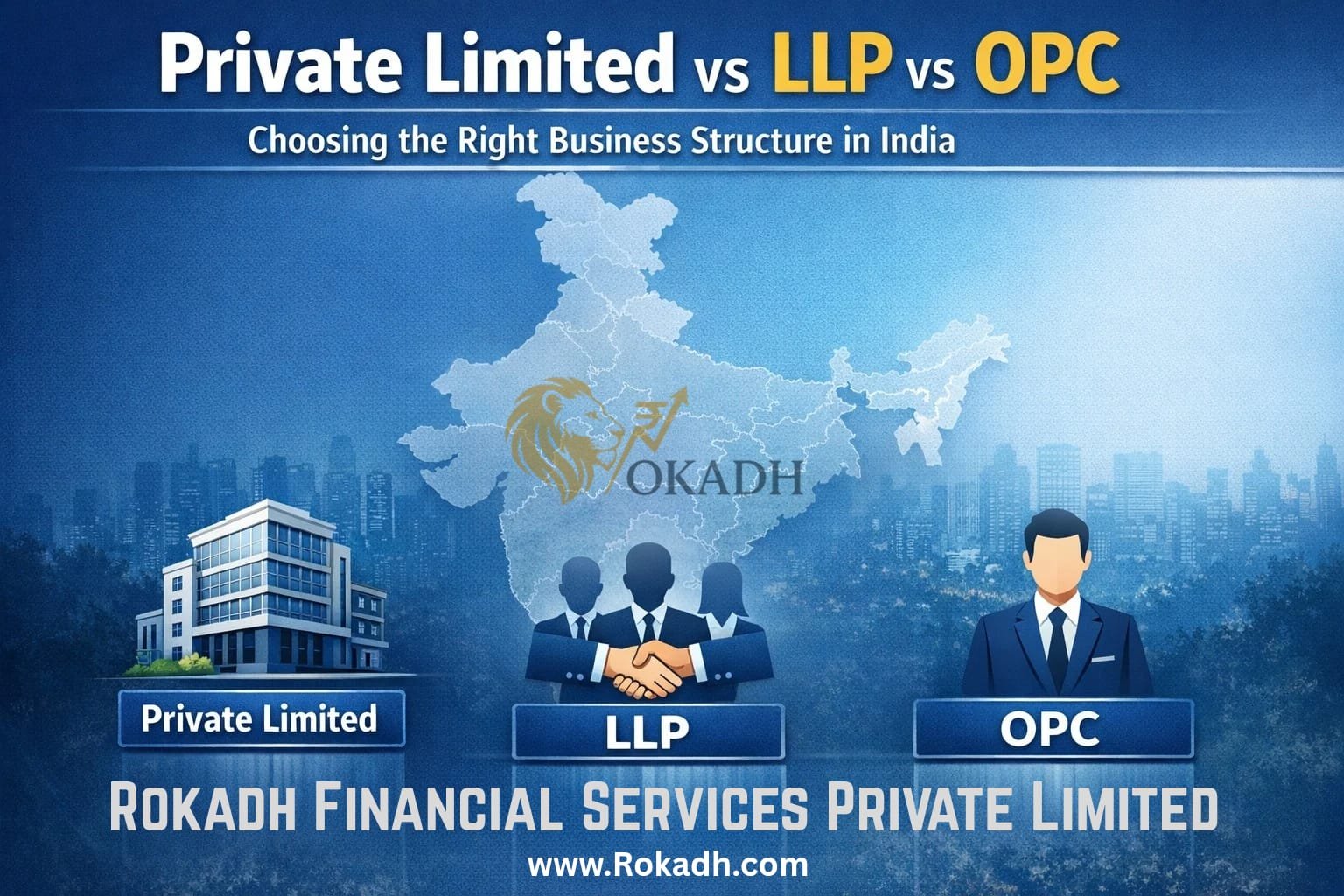
In India, the most popular business structures among entrepreneurs are:
• Private Limited Company (Pvt Ltd)
• Limited Liability Partnership (LLP)
• One Person Company (OPC)
Each structure has its own legal framework, tax implications, compliance requirements, and operational flexibility.
Entrepreneurs across cities such as Kanpur, Lucknow, Prayagraj, Noida, Ghaziabad, Gurgaon, Delhi, Hyderabad, Telangana, Ludhiana, Mumbai, and Bangalore often face confusion when selecting the right structure for their venture.
At Rokadh Financial Services Private Limited, we regularly guide startups, professionals, and business owners in making this critical decision.
This comprehensive guide will help you understand:
• What is a Private Limited Company
• What is an LLP
• What is an OPC
• Key differences between these structures
• Which structure is best for different types of businesses
• Taxation and compliance considerations
• Long-term scalability and funding implications
By the end of this article, you will have a clear understanding of which structure best suits your business goals.
Why Chosing the Right Business Structure Matters
Many entrepreneurs rush into company registration without fully understanding the long-term implications of the structure they choose.
However, the business structure impacts several important aspects, including:
1. Liability Protection
The structure determines whether your personal assets are protected from business liabilities.
2. Taxation
Different business entities are taxed differently under Indian law.
3. Compliance Requirements
Certain structures require regular statutory filings, audits, and regulatory compliance.
4. Funding Opportunities
Investors and venture capitalists often prefer Private Limited Companies over other structures.
5. Ownership Flexibility
Some structures allow multiple partners, while others are designed for a single founder.
For entrepreneurs in Delhi NCR, Bangalore, Hyderabad, Mumbai and other business hubs, selecting the right structure at the beginning can prevent future legal and financial complications.
Overview of Popular Business Structures in India
Before comparing them, let's understand each structure in detail.
Private Limited Company (Pvt Ltd)
A Private Limited Company is one of the most widely used business structures in India, especially for startups and growing businesses.
It is governed by the Companies Act, 2013 and registered with the Ministry of Corporate Affairs (MCA).
Key Features of a Private Limited Company
• Separate legal identity
• Limited liability for shareholders
• Perpetual succession
• Ability to raise external funding
• Shares can be issued to investors
This structure is commonly chosen by startups in Bangalore, Hyderabad, Mumbai, Delhi NCR and Noida, where venture capital and angel investments are common.
Minimum Requirements
To register a Private Limited Company, you need:
• Minimum 2 directors
• Minimum 2 shareholders
• Registered office address in India
• Digital Signature Certificate (DSC)
• Director Identification Number (DIN)
Advantages
• Strong legal credibility
• Easier to raise funding
• Limited liability protection
• Better business perception
Disadvantages
• Higher compliance requirements
• Mandatory annual filings
• Statutory audits required
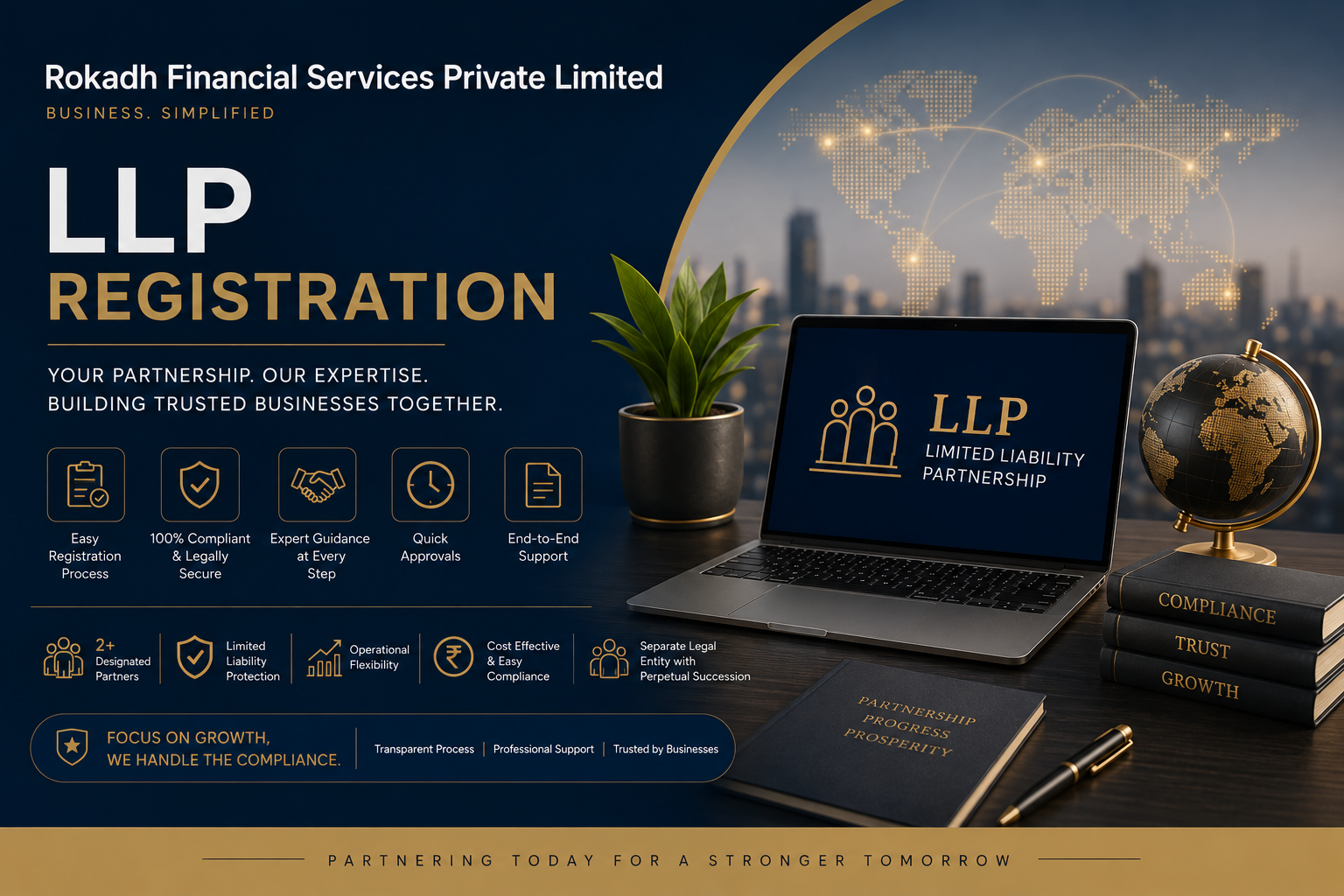
Limited Liability Partnership (LLP)
An LLP (Limited Liability Partnership) is a hybrid structure combining features of a partnership and a company.
It is governed by the Limited Liability Partnership Act, 2008.
This structure is popular among consultants, professionals, small service firms, and family businesses.
Key Features of LLP
• Separate legal entity
• Limited liability for partners
• Flexible internal management
• Lower compliance compared to companies
Minimum Requirements
To register an LLP:
• Minimum 2 partners
• At least 1 designated partner must be resident in India
• LLP agreement
• Registered office address
Advantages
• Lower compliance burden
• No minimum capital requirement
• Flexible profit sharing
Disadvantages
• Difficult to raise venture capital
• Limited scalability for startups
LLPs are commonly chosen by professional firms in Kanpur, Lucknow, Prayagraj, Ludhiana and Delhi.
One Person Company (OPC)
The One Person Company (OPC) was introduced to encourage individual entrepreneurs to start businesses with limited liability protection.
OPC is governed by the Companies Act, 2013.
Key Features of OPC
• Single promoter
• Limited liability protection
• Separate legal identity
This structure is ideal for:
• Freelancers
• Consultants
• Small online businesses
• Individual service providers
Minimum Requirements
To register an OPC:
• One director
• One shareholder
• Nominee director
Advantages
• Full control for the promoter
• Limited liability protection
• Simple ownership structure
Disadvantages
• Restricted expansion potential
• Cannot easily bring multiple investors
Many individual entrepreneurs in Hyderabad, Bangalore, Noida, and Mumbai initially start with OPC before converting to a Private Limited Company.
Detailed Comparison: Private Limited vs LLP vs OPC
Below is a simplified comparison for better understanding.
Ownership
Private Limited – Minimum 2 shareholders
LLP – Minimum 2 partners
OPC – Single owner
Liability
Private Limited – Limited liability
LLP – Limited liability
OPC – Limited liability
Compliance Requirements
Private Limited – High
LLP – Moderate
OPC – Moderate
Funding Opportunities
Private Limited – High
LLP – Limited
OPC – Very limited
Transferability
Private Limited – Easy share transfer
LLP – Limited partner transfer
OPC – Restricted ownership change
Which Structure is Best for Your Business?
The right structure depends on several factors.
Choose Private Limited Company if:
• You plan to raise funding
• You want to scale rapidly
• You want strong brand credibility
Most startups in Bangalore, Hyderabad, Delhi NCR, Mumbai and Gurgaon prefer this structure.
Choose LLP if:
• You are running a professional service firm
• You want fewer compliance requirements
• You prefer flexible management
Many consultants and professional firms in Kanpur, Lucknow and Prayagraj choose LLP.
Choose OPC if:
• You are a solo entrepreneur
• You want limited liability protection
• Your business is small or newly launched
Taxation Comparison
Taxation also plays a key role in choosing a structure.
Private Limited Company
Corporate tax rates apply.
Startups may also qualify for Startup India tax benefits.
LLP Taxation
LLPs are taxed as partnership firms.
Profit distribution among partners is not taxed again.
OPC Taxation
Taxation is similar to Private Limited Company.
Compliance Requirements
Compliance obligations vary significantly.
Private Limited Company
• Annual financial statements
• Annual returns with MCA
• Statutory audit
• Board meetings
LLP Compliance
• Annual return
• Statement of accounts
OPC Compliance
• Annual filing with MCA
• Audit requirements (if turnover threshold crossed)
Startup Ecosystems and Business Structures
Cities like Bangalore, Hyderabad, Delhi NCR, Mumbai and Noida have thriving startup ecosystems.
Investors in these regions typically prefer Private Limited Companies due to:
• equity issuance flexibility
• investor protection
• structured governance
However, smaller professional firms across Kanpur, Lucknow, Prayagraj and Ludhiana often prefer LLPs.
Common Mistakes Entrepreneurs Make
Many founders make mistakes such as:
• Choosing structure only based on cost
• Ignoring future funding plans
• Not considering compliance obligations
• Lack of professional consultation
These mistakes can create challenges later.
When Should You Convert Your Business Structure?
As businesses grow, they may need to change their structure.
Common scenarios include:
• Converting OPC to Private Limited when investors join
• Converting LLP to Private Limited for funding opportunities
Frequently Asked Questions (FAQs)
1. Which is better: Private Limited Company, LLP, or OPC?
The best structure depends on your business goals, funding needs, and scale of operations.
• Private Limited Company – Best for startups planning to raise investment or scale rapidly.
• LLP (Limited Liability Partnership) – Suitable for professionals, partnerships, and small businesses wanting limited liability with simpler compliance.
• OPC (One Person Company) – Ideal for solo entrepreneurs who want a corporate structure but operate alone.
Before choosing, it is advisable to consult professionals like Rokadh Financial Services Private Limited to determine the most suitable structure.
2. What is the minimum number of members required?
The minimum members required for each structure are:
• Private Limited Company – Minimum 2 shareholders and 2 directors
• LLP – Minimum 2 partners
• OPC – Only 1 shareholder and 1 director
OPC is the only structure that allows single ownership with corporate status.
3. Which business structure is best for startups seeking investment?
A Private Limited Company is the preferred structure for startups looking for:
• Venture capital funding
• Angel investors
• Equity investments
• Startup ecosystem participation
Investors usually prefer Private Limited Companies because they allow equity shares and ownership transfers.
4. Is LLP better than a Private Limited Company?
It depends on your business needs.
An LLP is better if:
• You want fewer compliances
• You are running a professional practice
• You don’t plan to raise external funding
A Private Limited Company is better if:
• You want to scale quickly
• You want investors
• You want a stronger corporate structure
5. What are the compliance requirements for each structure?
Compliance varies significantly.
Private Limited Company
Requires:
• Board meetings
• Annual General Meetings
• ROC filings
• Statutory audit
• Director KYC compliance
LLP
Requires:
• Annual Statement of Accounts
• Annual Return filing
• Audit only above certain turnover limits
OPC
Requires:
• Annual ROC filings
• Audit compliance
• Nominee requirement
LLPs generally have lower compliance burden compared to companies.
6. What is the tax rate for Private Limited Company, LLP, and OPC?
Taxation differs slightly.
• Private Limited Company – Generally taxed at 22% or 25% (plus surcharge and cess) depending on conditions.
• LLP – Flat 30% tax rate on profits.
• OPC – Taxed like a Private Limited Company.
Proper tax planning is essential before choosing a structure.
7. Can an OPC be converted into a Private Limited Company?
Yes.
An OPC can be converted into a Private Limited Company when:
• The business grows
• More shareholders join
• Investment is required
This flexibility allows solo entrepreneurs to start small and scale later.
8. Is LLP suitable for consultants and professionals?
Yes.
LLP is one of the most popular structures for:
• Chartered Accountants
• Consultants
• Lawyers
• Architects
• IT professionals
• Service firms
It offers limited liability protection with partnership flexibility.
9. Which structure has the lowest compliance cost?
Among the three:
Lowest compliance cost → LLP
Followed by:
• OPC
• Private Limited Company (highest compliance)
However, compliance should not be the only deciding factor.
10. How long does it take to register a company in India?
Typical registration timelines:
• Private Limited Company – 7 to 12 working days
• LLP – 7 to 10 working days
• OPC – 7 to 10 working days
The timeline depends on document readiness and MCA approval.
11. Can a salaried person start a Private Limited Company or LLP?
Yes.
A salaried individual can legally start:
• Private Limited Company
• LLP
• OPC
However, you must ensure that your employment contract does not restrict outside business activities.
12. Can a foreign citizen start a company in India?
Yes.
Foreign nationals can start a Private Limited Company in India.
However:
• At least one director must be an Indian resident.
• Compliance with FDI regulations may apply.
LLP participation by foreigners has additional restrictions.
13. What documents are required to register a company?
Common documents required include:
• PAN card of directors/partners
• Aadhaar card or identity proof
• Address proof
• Passport-size photographs
• Registered office proof
• Digital Signature Certificate (DSC)
Experts like Rokadh Financial Services Private Limited assist in handling the entire registration process.
14. Which business structure is best for small businesses?
For small businesses:
• LLP is ideal for partnerships and professionals.
• OPC works well for single entrepreneurs.
• Private Limited Company suits businesses planning to grow rapidly.
The decision should be based on growth plans and funding requirements.
15. How can Rokadh Financial Services help in company registration?
Rokadh Financial Services Private Limited provides complete support including:
• Business structure consultation
• Company registration
• LLP registration
• OPC registration
• ROC compliance
• Tax planning and advisory
We assist entrepreneurs across cities including:
Kanpur, Lucknow, Prayagraj, Noida, Ghaziabad, Gurgaon, Delhi NCR, Hyderabad, Ludhiana, Mumbai and Bangalore.
How Rokadh Financial Services Helps Entrepreneurs
At Rokadh Financial Services Private Limited, we assist entrepreneurs in choosing the right structure and managing regulatory compliance.
Our services include:
• Business registration
• Company incorporation
• LLP registration
• Startup advisory
• Compliance management
• Financial planning
We proudly support entrepreneurs across:
Kanpur
Lucknow
Prayagraj
Noida
Ghaziabad
Gurgaon
Delhi
Hyderabad
Telangana
Ludhiana
Mumbai
Bangalore
Our goal is to provide trusted financial and business advisory services that help businesses grow confidently.
Final Thoughts
Choosing the right business structure is one of the most important decisions in your entrepreneurial journey.
While Private Limited Companies offer scalability and funding opportunities, LLPs provide operational flexibility, and OPCs empower individual entrepreneurs.
The best structure depends on:
• your business vision
• funding plans
• compliance capacity
• long-term growth strategy
Before registering your business, it is always advisable to consult professionals who understand both the legal and financial implications.
At Rokadh Financial Services Private Limited, we are committed to helping entrepreneurs make the right decisions from the very beginning.
Visit us at:
Rokadh Financial Services Private Limited – Your Trusted Partner in Business and Financial Growth.